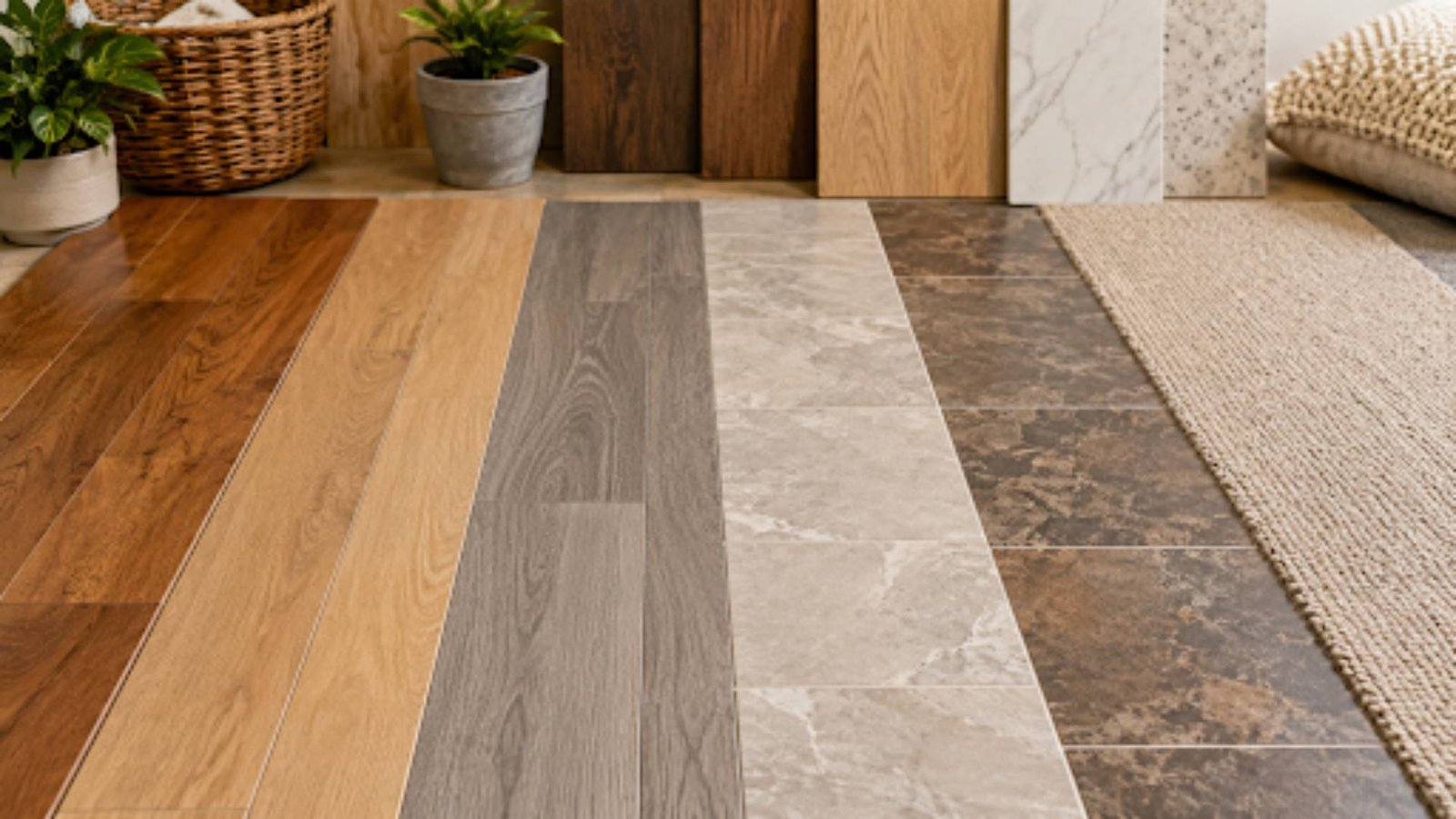
Flooring does much more than cover the floor beneath your feet. It influences how a room looks, feels, sounds, and performs every day. The right flooring can handle muddy shoes in an entryway, moisture in a bathroom, heavy traffic in a hallway, or quiet evenings in a bedroom.
The challenge is that no single flooring material is ideal for every situation. Hardwood offers natural character, while luxury vinyl can provide strong moisture resistance. Carpet adds softness and warmth, while porcelain tile offers excellent durability. Laminate can deliver the appearance of wood at a different price point, and natural stone brings a distinctive look that can last for decades when properly maintained.
The best choice depends on the room, your lifestyle, installation conditions, maintenance expectations, and budget.
What to Consider Before Choosing Flooring
Before comparing individual materials, think about how the room will actually be used.
Ask yourself:
- How much foot traffic will the room receive?
- Is moisture likely to be present?
- Are pets or young children using the space?
- Do you want a soft or firm surface underfoot?
- How much maintenance are you willing to do?
- Is noise reduction important?
- Will the floor need to withstand furniture being moved regularly?
- How long do you expect the flooring to last?
- Is the property a permanent home, rental, or investment?
- What is the complete installation cost?
The purchase price is only one part of the decision. Subfloor preparation, underlayment, installation, trims, adhesives, removal of old flooring, and waste can all affect the final cost.
Hardwood Flooring
Hardwood remains popular because of its natural appearance, warmth, and long-term appeal.
Solid hardwood is made from a single piece of wood. Its major advantage is that it can often be sanded and refinished several times during its life, depending on the thickness and condition.
Advantages of Hardwood
- Natural appearance
- Strong long-term appeal
- Can often be refinished
- Available in many wood species and finishes
- Can complement traditional and modern interiors
Limitations
Hardwood is not the best choice for areas with frequent moisture exposure. Standing water and repeated moisture problems can damage the material.
It can also scratch and dent, particularly in busy homes with pets or heavy furniture.
Hardwood works especially well in living rooms, dining rooms, bedrooms, hallways, and other relatively dry areas where appearance and longevity are priorities.
Engineered Wood Flooring
Engineered wood provides the appearance of real wood while using a layered construction.
A real wood surface layer sits over a stable core. This construction can make engineered wood less prone to certain movement issues associated with changes in temperature and humidity.
Advantages
- Genuine wood surface
- Attractive natural appearance
- Available in many styles
- Can be suitable for areas where solid hardwood may be less practical
- Often compatible with different installation methods
Limitations
Not every engineered wood product can be refinished the same number of times. The thickness of the real wood layer matters.
It can also be damaged by excessive moisture, so it should not automatically be treated as waterproof flooring.
Engineered wood can be a strong option for living spaces, bedrooms, dining areas, and open-plan interiors.
Laminate Flooring
Laminate flooring is designed to reproduce the appearance of materials such as wood or stone using a layered construction with a decorative surface.
Modern laminate can provide a convincing appearance and is available across a wide range of colours and patterns.
Advantages
- Often more affordable than natural wood
- Wide variety of designs
- Resistant to many everyday scratches
- Relatively straightforward installation for suitable products
- Easy to clean
Limitations
Traditional laminate is not automatically waterproof. Water can damage the core if it reaches vulnerable areas or remains on the surface for too long.
Repairability is another consideration. Individual damaged sections may not be as straightforward to refinish as hardwood.
Laminate can work well in bedrooms, living rooms, hallways, home offices, and other relatively dry areas.
Luxury Vinyl Flooring
Luxury vinyl flooring, including plank and tile formats, has become a popular choice for busy households.
It can imitate wood, stone, and other surfaces while offering practical resistance to moisture and everyday wear, depending on the specific product.
Advantages
- Available in many styles
- Comfortable compared with harder flooring
- Easy to maintain
- Many products offer strong water resistance
- Suitable for busy households
- Available in different installation formats
Limitations
Quality varies significantly between products.
Subfloor preparation is still important. Unevenness underneath can affect the finished appearance and performance.
Some lower-quality products may also show wear sooner in demanding environments.
Luxury vinyl can be particularly useful in kitchens, utility rooms, entryways, family rooms, and homes with pets.
Ceramic and Porcelain Tile
Tile is one of the most versatile flooring choices, particularly where moisture and durability are major concerns.
Ceramic and porcelain tiles come in countless colours, patterns, textures, and sizes.
Porcelain is generally denser and less water-absorbent than standard ceramic tile, although the exact performance depends on the product.
Advantages
- Excellent durability
- Easy to clean
- Suitable for moisture-prone spaces
- Huge range of designs
- Works well with underfloor heating systems when properly specified
Limitations
Tile can feel hard and cold underfoot.
Grout lines require cleaning and maintenance, and damaged tiles can be difficult to replace if an exact match is no longer available.
Tile can also make dropped objects more likely to break.
Ceramic and porcelain tile are particularly useful for bathrooms, kitchens, entryways, utility areas, and other spaces exposed to moisture or heavy traffic.
Natural Stone Flooring
Natural stone includes materials such as slate, limestone, marble, and travertine.
Every piece can have natural variation, giving stone a distinctive appearance that manufactured flooring cannot perfectly reproduce.
Advantages
- Unique natural character
- Strong durability when properly selected and maintained
- Long service life
- Suitable for many interior styles
- Can add a premium appearance
Limitations
Natural stone can be expensive to purchase and install.
Some stone types are porous and require sealing. Maintenance requirements vary considerably by material.
Stone can also be hard and cold underfoot, although rugs and suitable heating systems can improve comfort.
Natural stone is often considered for entryways, kitchens, bathrooms, living spaces, and high-end renovations where its appearance and longevity justify the investment.
Carpet Flooring
Carpet remains a practical choice where softness, warmth, and noise reduction are important.
It is particularly popular in bedrooms and living areas.
Advantages
- Soft and comfortable
- Helps reduce airborne and impact noise
- Adds warmth
- Available in many colours and textures
- Can create a cosy atmosphere
Limitations
Carpet can hold dirt and allergens and may require more frequent cleaning than hard flooring.
It is also less suitable for areas with significant moisture or frequent spills.
For homes with children or pets, consider stain resistance, pile type, cleaning requirements, and colour before choosing a carpet.
Flooring Comparison at a Glance
| Flooring | Moisture Resistance | Maintenance | Comfort | Durability | Typical Best Uses |
| Hardwood | Low to moderate | Moderate | Warm | High with care | Living rooms, bedrooms |
| Engineered wood | Moderate | Moderate | Warm | High | Living areas, bedrooms |
| Laminate | Moderate, product-dependent | Low | Moderate | Moderate to high | Bedrooms, living rooms |
| Luxury vinyl | High, product-dependent | Low | Moderate | High | Kitchens, hallways, busy homes |
| Ceramic tile | High | Low to moderate | Hard | High | Kitchens, bathrooms |
| Porcelain tile | Very high | Low to moderate | Hard | Very high | Bathrooms, kitchens, entryways |
| Natural stone | Varies | Moderate to high | Hard | High | Kitchens, entryways, feature areas |
| Carpet | Low | Moderate to high | Very high | Moderate | Bedrooms, living rooms |
These are broad comparisons. Always check the manufacturer’s specifications for the exact product, particularly when moisture resistance, installation method, or warranty requirements matter.
Best Flooring for Different Rooms
Kitchen Flooring
Kitchen floors need to cope with spills, dropped food, frequent cleaning, and heavy foot traffic.
Luxury vinyl, porcelain tile, ceramic tile, and some properly specified engineered flooring can work well.
Prioritise water resistance, easy cleaning, durability, and comfort.
Bathroom Flooring
Moisture resistance should be one of the first considerations.
Porcelain and ceramic tile are common choices. Suitable waterproof flooring products can also work well when installed correctly.
Pay close attention to the entire floor system, not just the surface material. Waterproofing, drainage, subfloor condition, and appropriate installation all matter.
Bedroom Flooring
Comfort often matters more in bedrooms.
Carpet provides softness and warmth, while hardwood, engineered wood, laminate, and luxury vinyl can create a clean, hard-floor appearance.
If you prefer hard flooring but want more comfort, area rugs can provide warmth and reduce noise.
Living Room Flooring
Living rooms offer greater flexibility.
Hardwood, engineered wood, laminate, luxury vinyl, carpet, and tile can all work depending on the home’s style and how the room is used.
Think about traffic, furniture, pets, cleaning habits, and the atmosphere you want to create.
Entryways and Hallways
Entryways need flooring that can tolerate dirt, moisture, shoes, and heavy traffic.
Porcelain tile, ceramic tile, luxury vinyl, and other durable options can be practical choices.
A good entrance mat can also reduce the amount of dirt and moisture that reaches the main floor.
Rental Properties
Rental flooring needs to balance appearance, durability, repairability, and cost.
Extremely delicate materials may not make financial sense in a high-turnover property.
The best choice is usually the material that provides the right combination of durability and maintenance without unnecessarily increasing installation costs.
Flooring for Homes With Pets
Pets can influence flooring decisions more than many homeowners expect.
Consider:
- Scratch resistance
- Stain resistance
- Moisture resistance
- Ease of cleaning
- Nail traction
- Odour retention
- Repairability
Luxury vinyl and certain tile products can be practical options for pet-friendly spaces.
Hardwood can also work, but species, finish, and maintenance expectations should be considered carefully.
Carpet may provide comfort but can require more effort when accidents occur.
Flooring for Busy Family Homes
A family home often needs flooring that can tolerate everyday wear without requiring constant attention.
Look for surfaces that are:
- Easy to clean
- Durable
- Resistant to everyday spills
- Suitable for heavy foot traffic
- Comfortable enough for daily use
- Reasonably easy to repair or replace
There is no need for every room to have the same flooring.
Using different materials strategically can provide better performance while still maintaining a consistent design throughout the home.
Why Subfloor Preparation Matters
Even high-quality flooring can fail if the surface underneath is not properly prepared.
Before installation, the subfloor may need to be:
- Cleaned
- Dried
- Levelled
- Repaired
- Structurally strengthened
- Checked for moisture
Uneven subfloors can cause movement, gaps, cracked tiles, squeaking, visible imperfections, or premature wear.
Do not assume that installing new flooring will hide problems underneath. In many cases, it simply makes them more noticeable.
Understanding Underlayment
Underlayment sits between the subfloor and certain types of finished flooring.
Depending on the flooring system, it can help with sound reduction, comfort, moisture management, minor surface imperfections, and installation performance.
The correct underlayment depends on the flooring product and installation method.
Using the wrong type can create problems rather than solve them, so always follow the flooring manufacturer’s requirements.
Plan Transitions Between Flooring Materials
Different flooring materials often meet at doorways, room entrances, or open-plan areas.
Transitions should be planned before installation begins.
Think about:
- Differences in floor height
- Direction of flooring
- Door positions
- Thresholds
- Expansion requirements
- Visual continuity
Poorly planned transitions can look awkward and create trip hazards.
In open-plan homes, you may also want different flooring materials to complement each other rather than compete visually.
Common Flooring Installation Mistakes
Installing Over an Unprepared Subfloor
This can cause uneven surfaces, movement, cracked tiles, or premature wear.
Ignoring Moisture
Moisture problems should be addressed before installing flooring, particularly in basements, bathrooms, kitchens, and ground-level spaces.
Choosing Flooring Based Only on Appearance
A beautiful floor is not necessarily suitable for a high-traffic or moisture-prone room.
Skipping Manufacturer Instructions
Installation requirements vary between products. Ignoring them can affect performance and warranties.
Forgetting Expansion Requirements
Some flooring materials need room to expand and contract. Incorrect installation can lead to buckling or gaps.
Underestimating Waste
Cutting around walls, corners, doorways, and unusual room shapes creates waste. Order quantities based on the actual installation requirements rather than the room’s simple square footage alone.
Using the Wrong Cleaning Products
Certain finishes and materials can be damaged by harsh cleaners or excessive water. Follow the manufacturer’s care recommendations.
How to Compare Flooring Costs Properly
Do not compare flooring products by material price alone.
Calculate the estimated total installed cost, including:
- Flooring
- Underlayment
- Adhesive
- Installation
- Subfloor preparation
- Removal of existing flooring
- Waste
- Trims and thresholds
- Delivery
- Sealing or finishing where required
A more expensive flooring product can sometimes provide better long-term value if it lasts substantially longer or requires less maintenance.
On the other hand, paying more does not automatically guarantee better performance.
The goal is to match the product with the room.
Should You Use the Same Flooring Throughout the House?
Using one flooring material throughout a home can create visual continuity and make spaces feel connected.
However, it is not always the most practical choice.
Bathrooms may require better moisture resistance. Bedrooms may benefit from softer surfaces. Entryways may need greater durability.
A coordinated combination of materials can often provide the best balance between appearance and performance.
Use complementary colours, tones, or textures to make different flooring types feel intentional rather than disconnected.
Frequently Asked Questions
What is the best flooring for a home?
There is no universal best flooring. The right option depends on the room, moisture exposure, foot traffic, comfort preferences, maintenance expectations, budget, and desired appearance.
What flooring is best for high-traffic areas?
Durable tile, porcelain, luxury vinyl, and appropriately selected hardwood or engineered wood can work well in busy areas. Product specifications and installation quality matter as much as the material category.
What is the easiest flooring to maintain?
Many luxury vinyl, laminate, ceramic, and porcelain flooring products are relatively easy to clean. Maintenance requirements vary by product, so always check the manufacturer’s recommendations.
What flooring is best for bathrooms?
Moisture-resistant options such as properly installed porcelain or ceramic tile and suitable waterproof flooring products are commonly used. The complete waterproofing and installation system is important.
Is hardwood suitable for kitchens?
Hardwood can be used in kitchens, but it requires more care around spills and moisture than highly water-resistant flooring. The specific wood, finish, installation, and household habits all matter.
Conclusion
Choosing flooring is less about finding the most expensive, attractive, or popular material and more about finding the right match for the space.
Consider moisture, traffic, comfort, maintenance, durability, installation requirements, and total cost before making a decision. Hardwood and engineered wood can bring warmth and natural character. Laminate and luxury vinyl offer practical alternatives for many busy spaces. Tile provides strong durability and moisture resistance, while carpet remains an excellent choice where softness and warmth matter most.
Do not overlook the parts you will not see after installation. A properly prepared subfloor, suitable underlayment, carefully planned transitions, and correct installation can have a major impact on how well the finished floor performs.
When you choose flooring based on how a room is actually used, you are far more likely to end up with a floor that looks good today and continues to work well for years to come.